all Bucky wanted to do was get some more tea and now this. Thanks a lot, Sam. You had to fuckin’ tell him, you ass.
Aggressively Progressive Steve Rogers is so what I’m here for.
STeve would unleash and be all “DO YOU KNOW HOW MUCH WHOOPING COUGH SUCKS?! DO YOU?! DO YOU REALLY?! ARE YOU FUCKIN’ STUPID?! BUCKY, TELL THEM HOW I BROKE TWO RIBS! TELL THEM!”
Omg, new headcanon, Beleaguered Bucky Barnes being grabbed by the shoulders and practically lifted into camera view by Steve shouting about how Bucky needs to confirm some terrible illness because no one else is alive form that time to corroborate any of Steve’s claims. Bucky shyly telling the reporters that yes, Steve did indeed have that thing adn yeah it is dangerous and Steve jumping back into frame like “I told you! I TOLD YOU IT SUCKED SHUT UP JENNY MCCARTHY!”
“AND YOU KNOW WHAT ELSE?! POLIO!”
“Steve you never had fucking polio-”
“YEA BUT IT STILL SUCKED! KNOW WHAT STOPPED IT?! VACCINES!”
“Oh my God, Steve.”
“I DIDN’T EVNENKNOW WHAT THAT SHOT WOULD DO TO ME BUT I TOOK IT!”
“Steve, that’s… That’s not really a good argument.”
“I DON’T CARE FOX NEWS NEEDS TO STOP USING MY IMAGE!”
This is what Republicans try to demonize for political gain. Think about it.
I know some of you know about my mom. About the 9 months I got with her after she was diagnosed. But I don’t think I’ve told anyone about the last week.
She was released from the hospital. But not before a counselor and her oncologist came to talk to everyone. They explained that she would have maybe a few extra days if they continued the treatments, but she was not going to get any better. She was only going to get worse, and it was just a matter of how long it would take for her to die.
She refused any further treatment.
She wanted to go home. She was tired. So they sent her home with more painkillers and zofran. And a couple of days later she died. She died surrounded by friends and family, but first she got as much ice cream as she wanted and caught up on orange is the new black and sorted out her funeral arrangements.
THAT is what they want to claim is a death panel. Realizing you’re dying and taking yourself off of the treatments that haven’t worked.
This is my Mama before cancer
This is my Mama after cancer
“Death Panels” didn’t kill her. The stage 4 lung cancer did.
People who have never struggled financially have no idea what it looks like. They think everyone who lives in poverty should be constantly covered in dirt and tattered rags. 🙄🙄🙄
I can’t tell you how many times people told me I wasn’t poor because “If you were, you couldn’t afford x thing,” where “x thing” was usually something I absolutely could not afford normally but either got as a gift, got at a massively reduced price in a garage sale or thrift store, or found somewhere for free. Some of my furniture for example is stuff people were throwing away despite being in perfectly good condition, like my TV. It’s one of those older box TVs that are absurdly big.
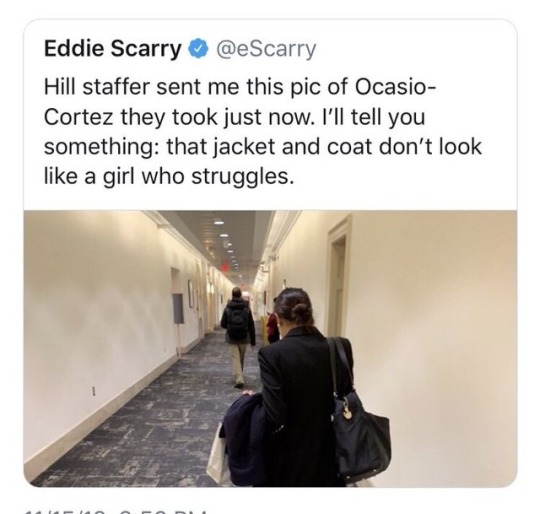
Owning stuff isn’t a sign of anything half the time. And uh, it’s not like she could go to work in rags! Lots of poor people have to buy or rent dress clothes for work. That doesn’t mean shit. It’s just how the world works.
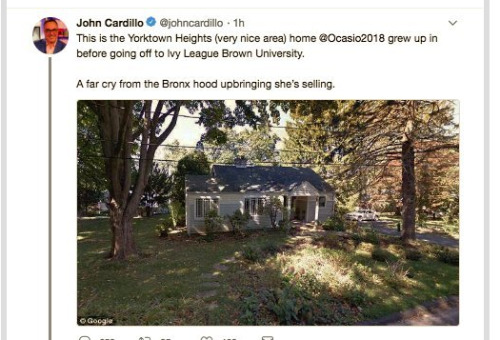
Also that house they’re showing is so small and looks old? It probably isn’t worth much. But it’s also rural, so she’d HAVE to go to whatever city was closest for things like groceries or school, probably. How does that prove anything about her upbringing?
People really don’t know what poor is. Wow.
❄💙 Bella 💙❄
I own quite a few nice looking items of clothes. Some of them were gifts, others were thrifted, some are quality replicas of unaffordable items. I still struggle to make my rent every month and I have zero savings, but most people would not know that by looking at me.
Poverty doesn’t have to be rags and begging outside the subway station. It can be the grad student eating nothing but mashed potatoes for a week. Ocasio-Cortez’s opponents are just looking for whatever they can to criticize her. -V
Tea time part of the reason it’s hard to create LGBT spaces for minors is because there is a common perception that we’re literally child predators. Like if a gay man were to try and make some sort of youth center for young boys the critiques would be relentless. There are probably people who would read that sentence and think those critiques are justified.
And homosexuality as a whole is synonymous with “sex” in the minds of cishets. So, naturally having a space just for gay kids would read as: Youth Orgy.
As someone who works in medicine I want to flush out the health of the pregnant person one because it’s a lot more complex than people think it is.
So:
1.The pregnancy is ectopic (in an falopian tube, and not implanted in the uterus) and is both a risk to the mother and unviable. (This is the only one you usually hear people talk about, when they speak of “medical necessity.” And it’s often the only one provided in contexts where only medically required abortions or ones that save the pregnant person’s life are legal).
2. Is on meds that they need to stay safe and healthy that they will have to discontinue (antipsychotics are a big one here).
3. Pregnant person has a medical condition that needs urgent treatment that they cannot receive while pregnant (ie- has cancer, and needs chemotherapy).
4. The fetus has died but has not been expelled from the body naturally. This treatment is still considered an abortion, and is preformed in the same clinics, by the same professionals. (This is one of the main issues that should give even the most staunch abortion clinic protesters pause: almost half of the women who walk through those doors might be heading to receive a procedure to remove a dead child that they wanted. A baby they are grieving. And you’re yelling at them? Have some shame).
5. The patient is seriously mentally ill and the pregnancy will cause life-risking levels of anxiety or depression.
6. The patient is transgender and suffers from dysphoria that will make them miserable, and possibly unwell, should they carry the pregnancy to term
7. The pregnant person is still a child, and although they were able to become pregnant and have regular menses, their body has not developed and grown to the point where they can carry an pregnancy to term and go through labour without risk of organ damage and breaking bones.
8. The patient was assaulted and became pregnant as a result of rape. The prospect of carrying the pregnancy to term disturbs them greatly and might put them at risk of suicide.
9. The person is an active drug addict and will not be able to be sober for the duration of the pregnancy, and the child will suffer as a result.
11. The patient is believed to be dangerously ill but still must undergo diagnostic procedures which a pregnant person cannot safely undergo (X-Rays and CT Scans both produce radiation unsafe for a developing fetus). If the pregnancy is carried, the diagnostic process cannot safely proceed and the patient may die if they are actually sick.
This last one isn’t about the health of the mother, but of the child:
12. The baby has trisomy 18 or another congenital defect that will make it likely that the pregnancy is not viable, or that if the child is born it will live only a few very painful days. I cannot understand anyone that would insist a child be born to die within the week. It is cruel and unusual.
seriously, there are so many health related reasons not to carry a pregnancy. countries that outlaw abortion outright that argue “people can get them in life threatening circumstances” often do not take half of these concerns into account.
certainly, abortion should be legal for everyone, for any reason. but it’s devastating to hear of people in circumstances where they have to choose between taking their medications to keep themselves functional or breaking the law, all because their country doesn’t understand that abortion is more often medically necessary than not in cases where it is wanted.
Since childhood, Ariel has been among my favorite Disney princesses. I connect with her deeply – and whenever someone (like Keira Knightley recently) brings up the old line that she is a ‘bad role model’ for young girls because she ‘gives up her voice for a man,’ my heart breaks.
That reading of Ariel’s character is reductive and inaccurate.
Everyone always mentions that Ariel was interested in the human world before meeting Eric, but not as many people point out how radical that makes her in the context of her own society.
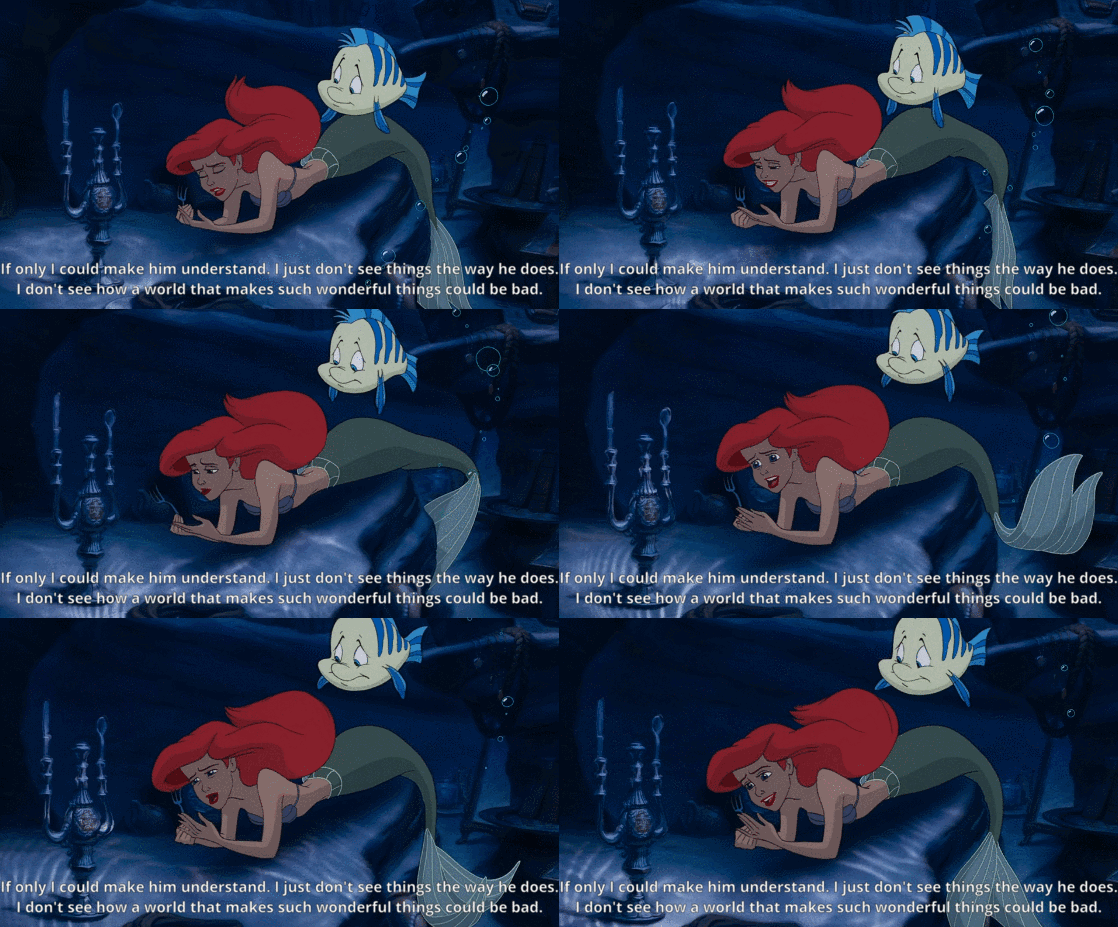
Ariel lives in a society that is xenophobic towards humans, Triton at various points calls them “barbarians,” “savage,” and “incapable of any real feeling.” She lives in a society that constantly tells her that her interest in the human world is wrong and bad, something she struggles with at the start of Part of Your World:
By seeking a fuller understanding of the human world, Ariel actively challenges her father’s xenophobia, thinking for herself instead of accepting her society’s fears and prejudices.
The film goes out of its way to establish Ariel as an outsider within her own society. Think for a moment about the opening lines of Part of Your World:
Look at this stuff. Isn’t it neat? Wouldn’t you think my collection’s complete? Wouldn’t you think I’m the girl The girl who has everything? Look at this trove, Treasures untold How many wonders can one cavern hold? Lookin’ around here you’d think Sure, she’s got everything…
People who criticize Ariel so often mis-characterize her as simply a spoiled teenager. The very statement, “She gave up her voice for a man!” implies she’s a foolish girl who throws her life and agency away in a fit of pique.
Yet, the opening of Part of Your Worldanticipates that certain members of the audience will have a superficial understanding of Ariel’s pain and directly addresses that. On a superficial level, Ariel does seem like “the girl who has everything.” She is the daughter of the most important merman in Atlantica, she has countless treasures hidden away in her grotto…
But that’s the thing, you see. They’re hidden in her grotto. Ariel may be the daughter of the sea-king, but the sea-king hates and fears humanity. Part of Your World is the most heartbreaking rebuttal to anyone who sees Ariel as a shallow teenager because it shows how alone she truly is. Except for Flounder, she has no one under the sea she can genuinely confide in. (She confides in Sebastian, of course, but he was sent by her father to spy on her and he does betray her trust
– by mistake, but he does). Her sisters and the rest of Atlantica presumably do not question the prejudices that cause the human world to be forbidden to the sea folk.
Ariel is an outcast, forced to hide who she is from the people who should love her unconditionally.
The more Part of Your World goes on, the more devastating and resonant Ariel’s collection of artifacts becomes.
These artifacts represent a void in her life and, at the same time, are the only means she has of filling that void.
She longs to have knowledge, but her society imposes ignorance on her. She longs to see the human world herself, to ask questions and finally be answered – but it is all denied her. The imposed ignorance forces her to live vicariously through the artifacts she collects.
She cannot see a couple dancing, so she must content herself with a music box.
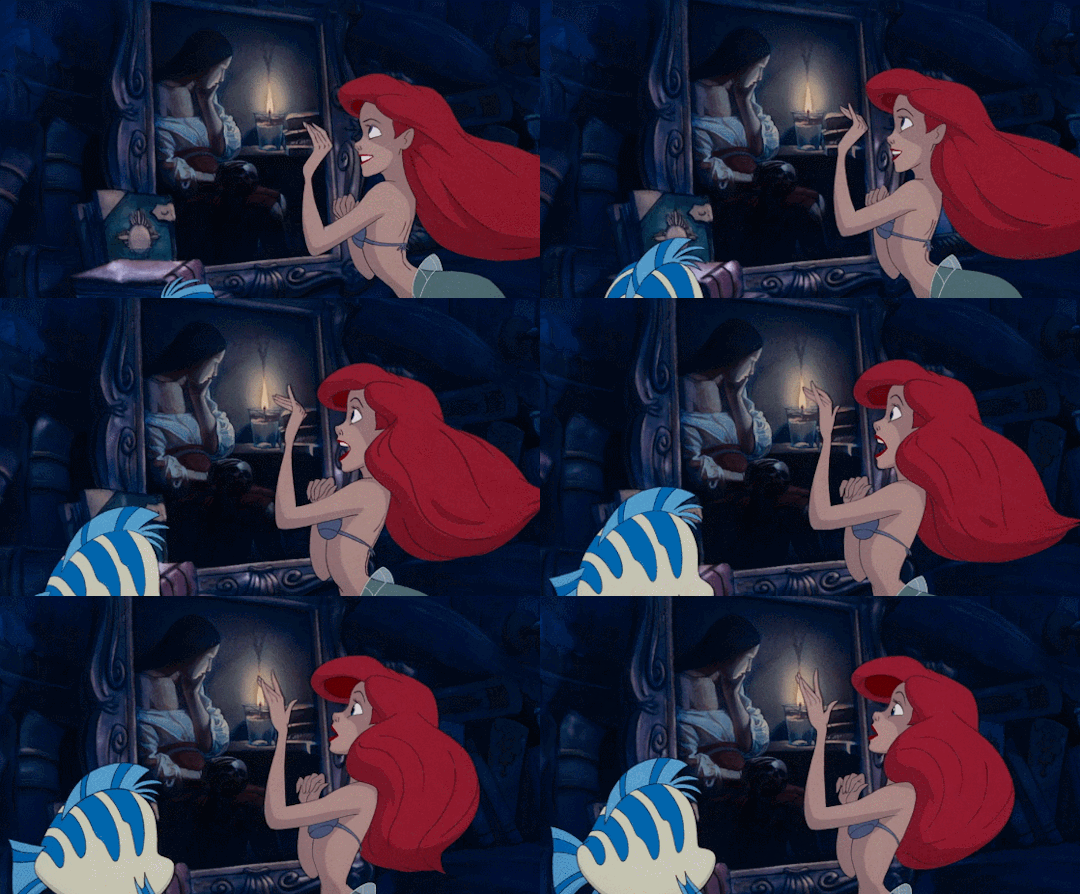
She can only experience the shadow of fire on oil and canvas.
Her collection perpetually reminds her that there is a world beyond her reach. At the same time, it is her central way of interacting with that world. Yes, she can go up to to the surface and talk to Scuttle, but her collection is something so much more personal. These are items she saved from the ruins of ships, sometimes at the risk of her own life… so she could study them, learn from them, and lament the unjust rules of her society that prevent her from learning more…
Her courage, her curiosity, her thirst for knowledge are all bound up in these precious possessions.
And yes, they are objects. Yes, she wants more than a collection of objects. But this collection is all she has. And, as far as Ariel knows, it is all she will ever have…
When you’re all but alone in the world and you have only meager scraps to cling to, those scraps mean the world to you.
And, I remind you, Ariel cannot even openly enjoy her collection of scraps, the shadows of a world she cannot touch. She has to hide even them, guard them, keep them secret.
Ariel’s grotto is a place of solace and security where she can be herself without fear of judgment.
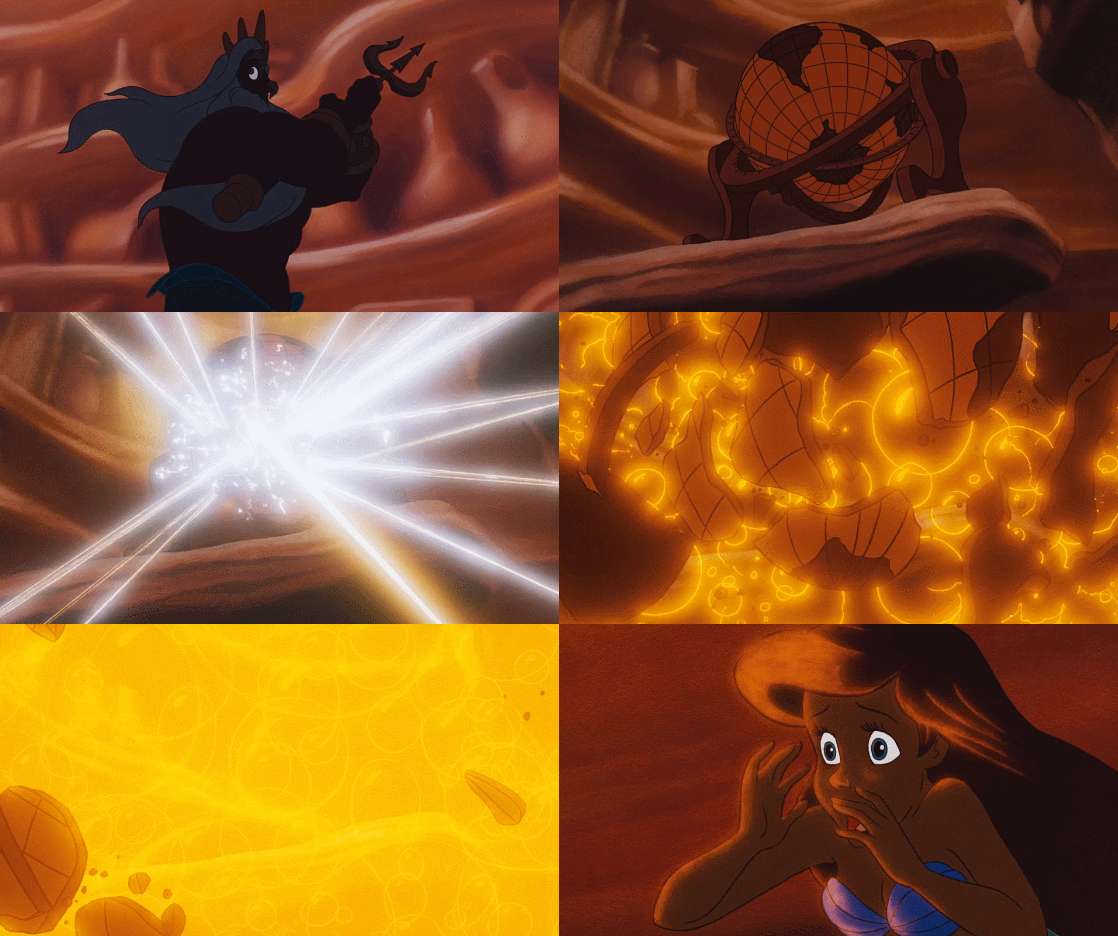
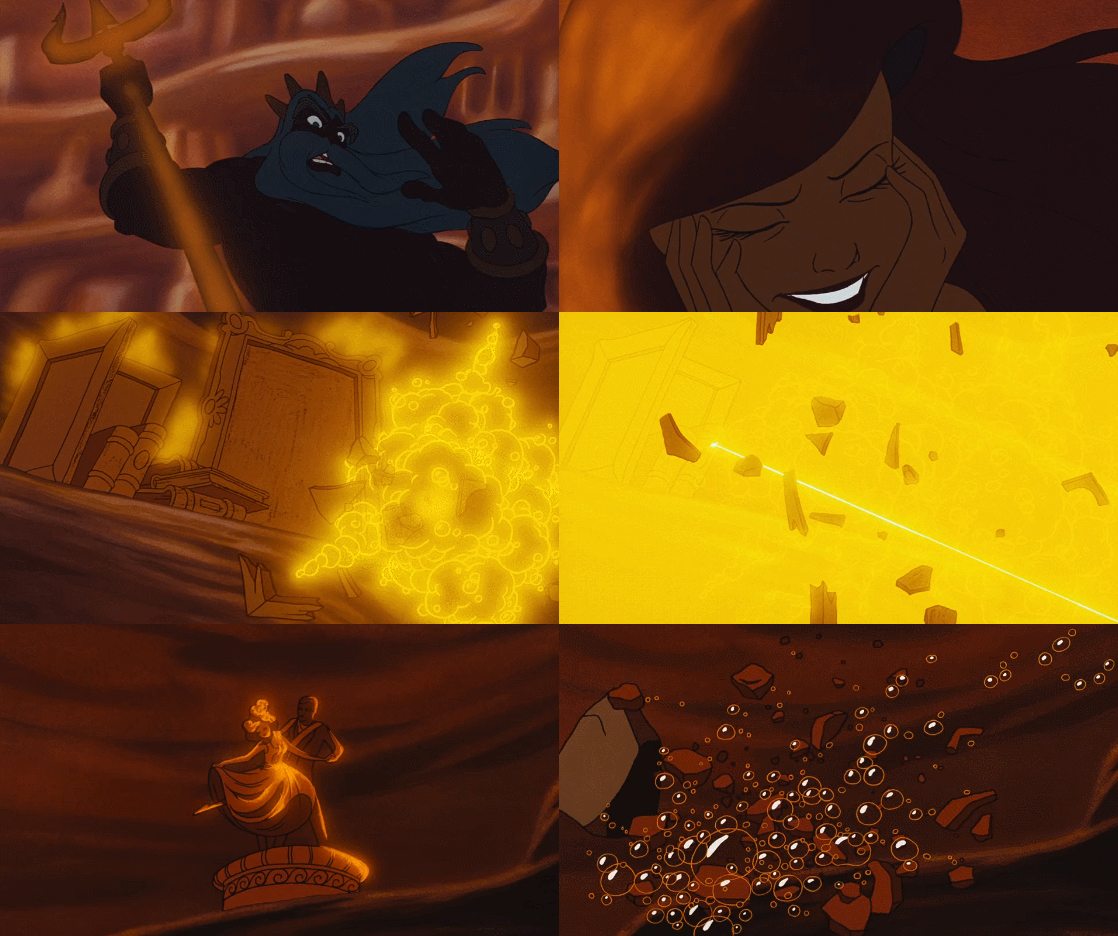
There is a reason the destruction of Ariel’s grotto harrowed me more as a child than any other scene in a Disney film. I could hardly watch it. I hid my face. I begged my family to skip scene. I was reduced to a sobbing mess. On a personal level, it harrowed me more than the destruction of Cinderella’s dress.
That reason is because, in watching the scene, I felt the pain of a place of refuge being invaded.
By the time we reach the destruction of the grotto, we are as emotionally invested in Ariel’s collection as she is because we see that the objects are more than objects. They are extensions of herself, encapsulating all her feelings of hope and hopelessness.
Destroying those items is like annihilating a part of her soul.
That is why I hate the “she gave up her voice for a man” line of thought so much. Because it so blatantly disregards the context of the film. Because it paints Ariel as a shallow teenager. Because it places blame for what follows solely on Ariel’s shoulders and absolves Triton of any wrongdoing.
I want to tread carefully here because, like Ariel, Triton is a nuanced and complex character. He has good intentions and cares about his youngest daughter.
Yet, even a well-intentioned individual can be in the wrong. Even an individual who is right about certain things (Ariel is indeed impetuous and reckless at times – though I hope my analysis reminds readers that those are not her sole character traits), can be wrong about other things.
And Triton’s confrontation with Ariel highlights his failings and his faults.
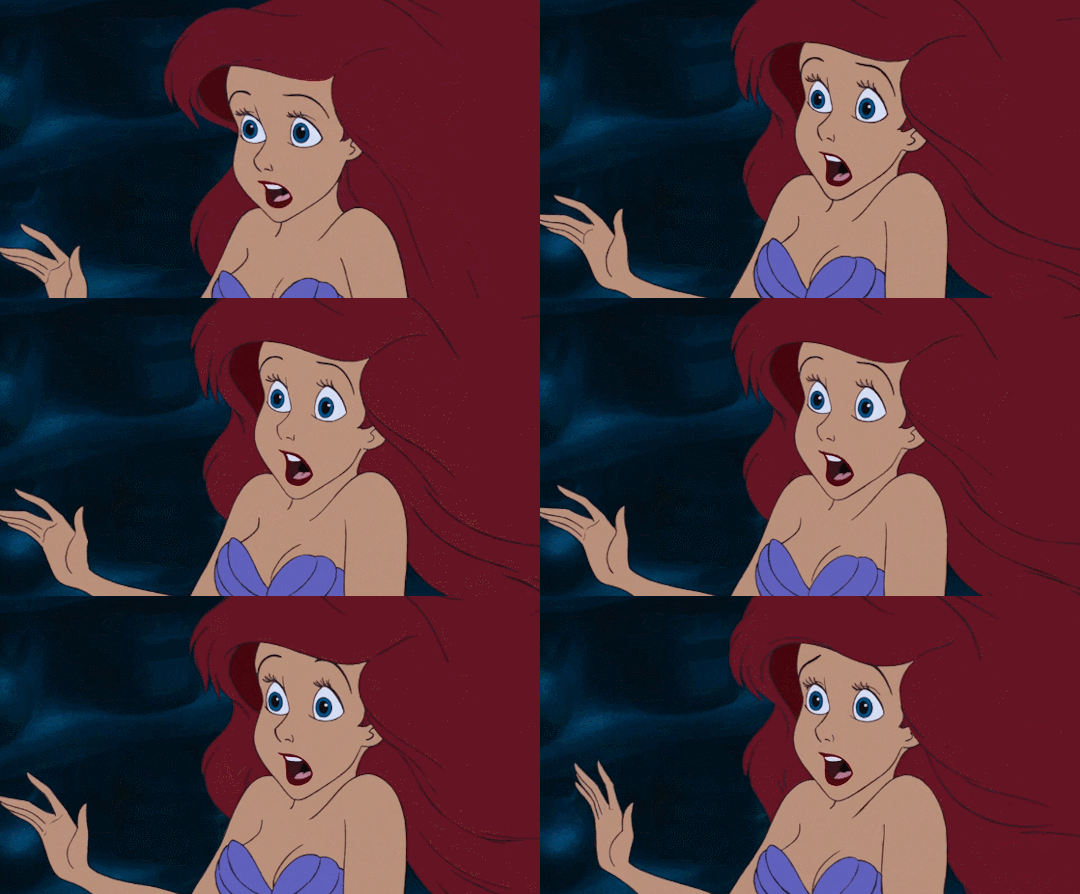
Look at Ariel’s face when she first sees her father in the grotto:
The enhancement of expression in animation allows the audience to clearly see the fear in her face.
Triton has created an environment where his own daughter is afraid of him.
No parent should do that to their child.
Confronting Ariel, Triton says, “I consider myself a reasonable merman. I set certain rules and I expect those rules to be obeyed.”
On one level, Triton is right to expect his children to respect the rules he sets in place.
What I feel Triton misses, however, is that respect is not the same as intimidation.
Since Triton wants Ariel to accept his rules based solely on his authority as her father, he makes it impossible for there to be any communication between himself and his daughter.
This dynamic means that he will not listen to Ariel even when Ariel is in the right and he is not. Children should listen to their parents, but in the same way, parents should listen to their children.
Triton may be in the right to worry about his daughter’s safety, but his fear is still born of bigotry – bigotry that Ariel recognizes and rejects.
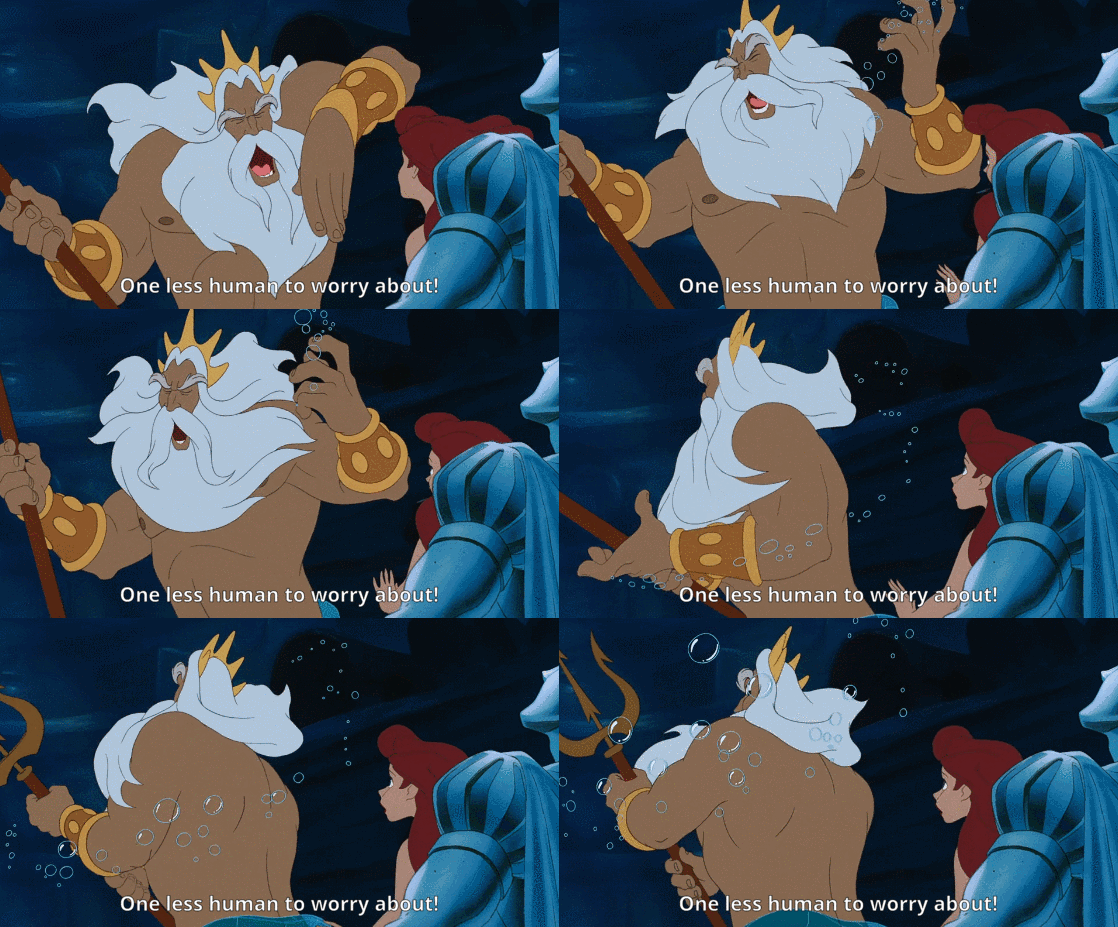
Triton, after all, grows angry at his daughter because she wouldn’t let another living being die. He specifically calls her out because she “rescued a human from drowning.”When Ariel counters that allowing someone helpless to miserably drown is cruel, he shuts her down with:
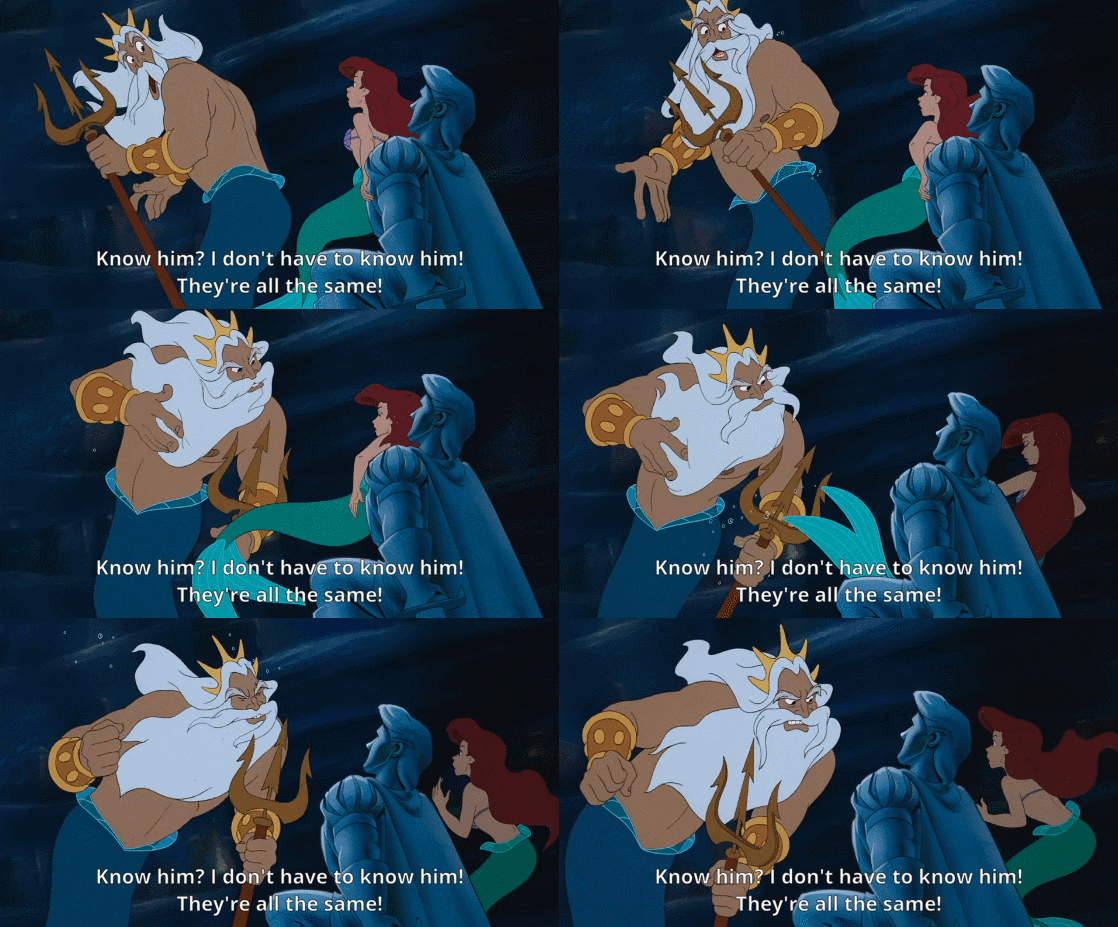
When Ariel points out the illogical nature of her father’s brutal line of thought and says, “You don’t even know him!”, Triton responds:
Even if a viewer is largely sympathetic to Triton, that viewer cannot ignore Triton’s prejudice in this moment.
He generalizes millions of people.
And if the rules he sets down include the tacit understanding, “Let innocents die because, by virtue of their humanity, their lives have no value,” then maybethose rules deserve to be broken.Maybe those rules need to be changed.
Ariel may be a teenager, but she is wiser than her father here.
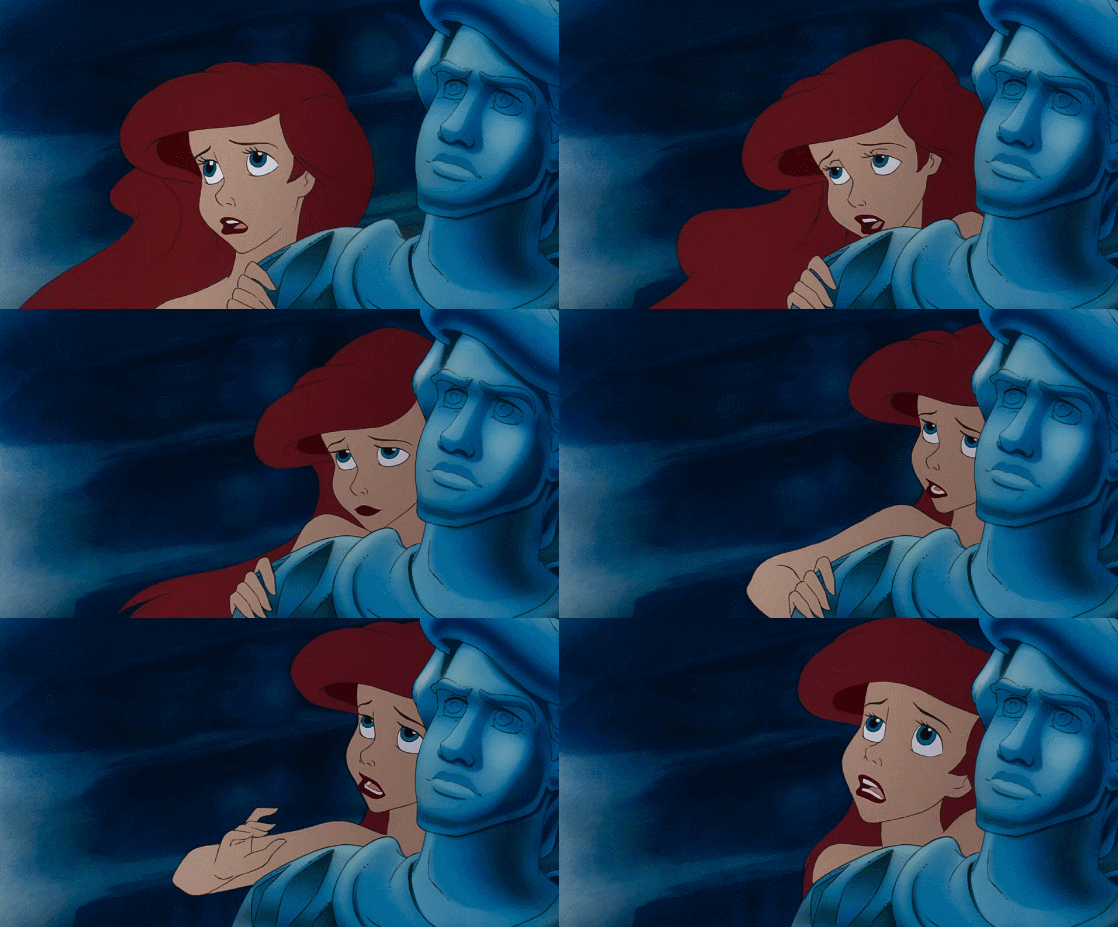
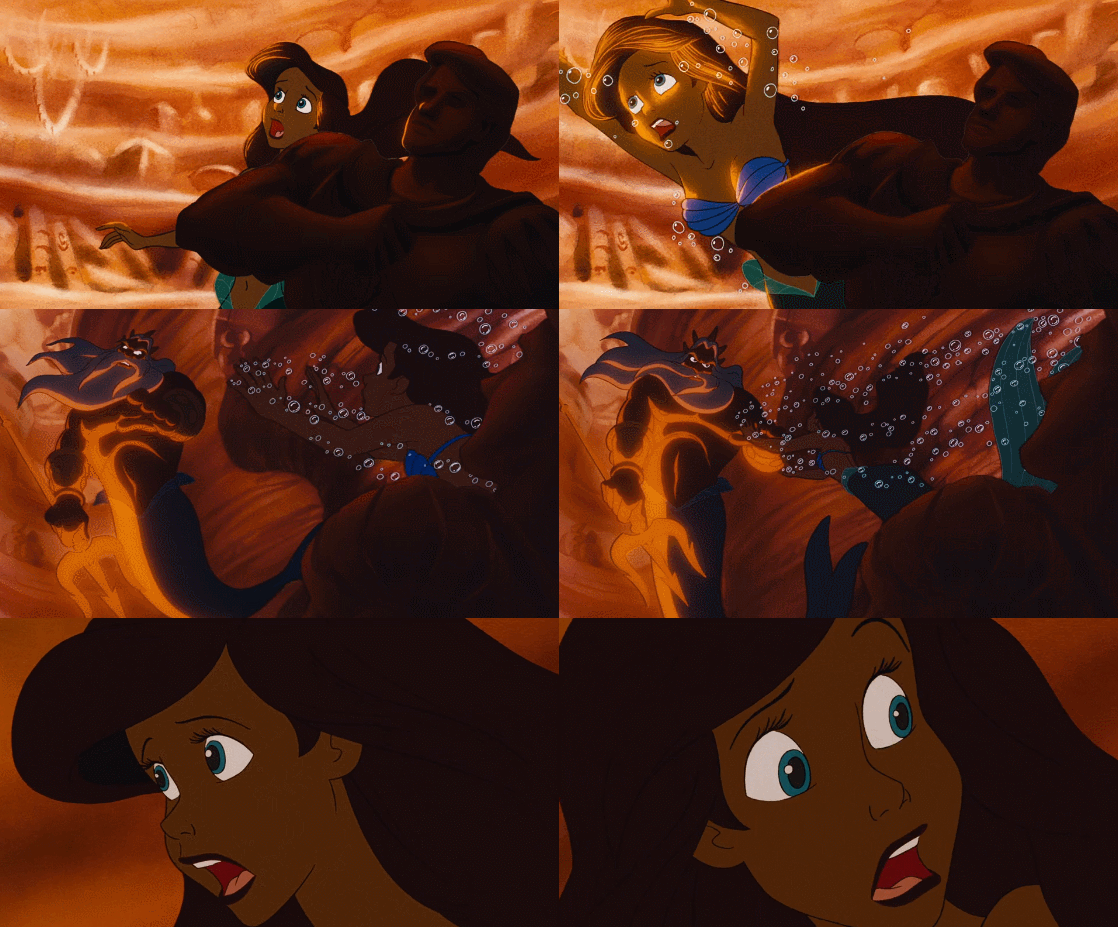
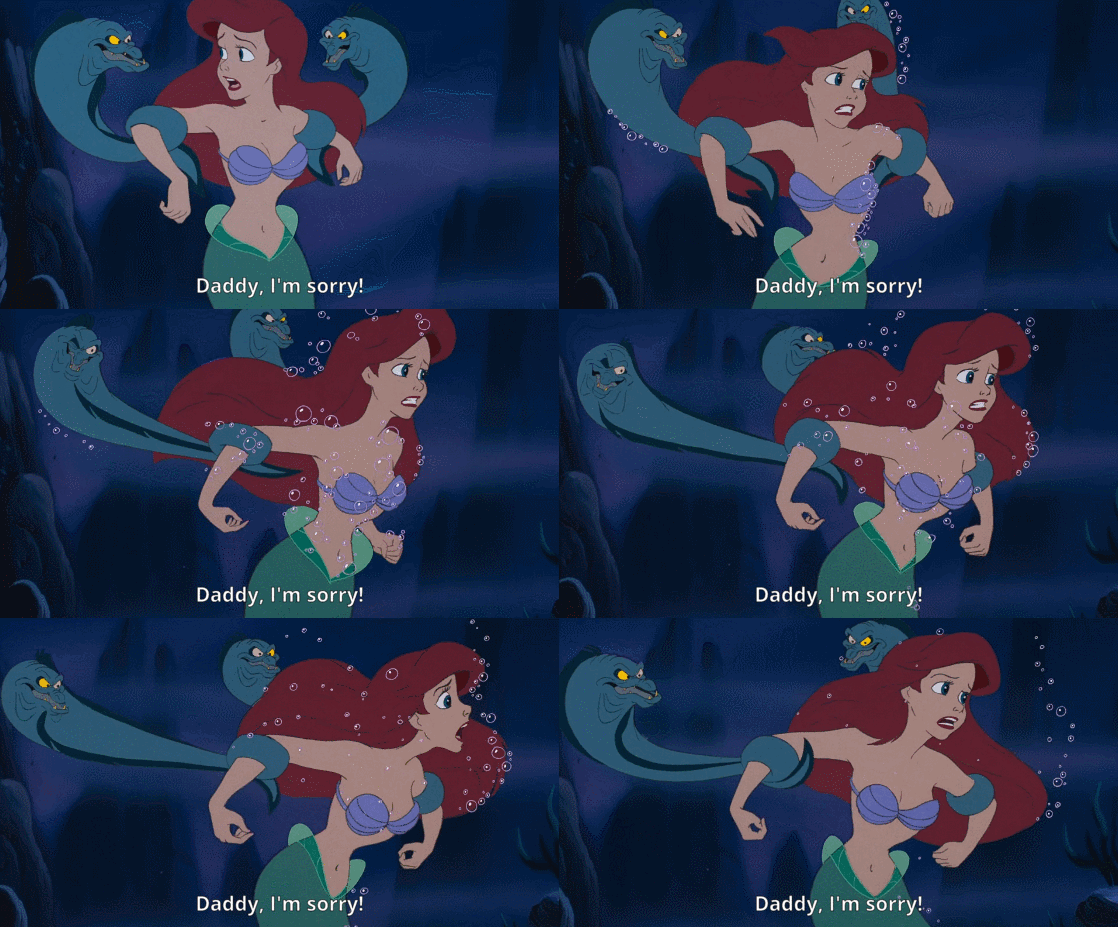
(Also, can I say that Ariel’s body language here breaks my heart every time I see it? She’s swimming away from her father, recoiling…
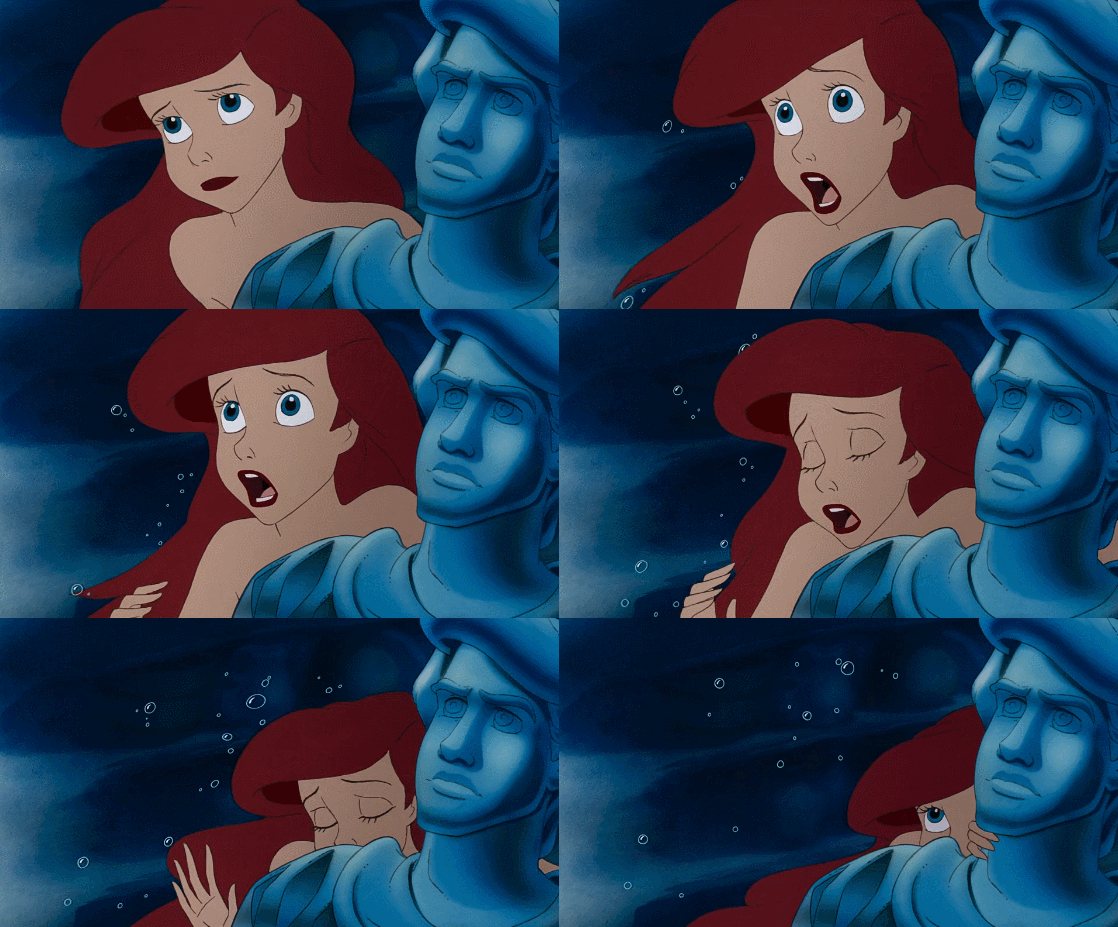
…until she’s cowering behind Eric’s statue. She looks like she’s about to cry as her father pours forth more vitriol…
…and after she bursts out with the exclamation, “Daddy, I love him!”, she’s terrified that she’s said it.)
Triton believes that he alone is in the right and destroys the grotto because he feels it is “the only way” to “get through to” his daughter. He believes he must be cruel only to be kind.
Yet, in the end…
…he only succeeds…
…in being cruel.
Triton’s unwillingness to listen to his daughter
– his unwillingness to treat her with the same respect he demands of her –
only widens the gulf between them.
Ariel does not go to the sea-witch because she has been mooning over a man.
Ariel goes to the sea-witch because she has no voice in her own home. Becoming human, she gains the ability to live life on her own terms. Becoming human, she ironically gains the voice she has been denied for so long.
Ariel goes to the sea-witch because her father sends a message to her – a message that she does not matter, that there is no place for someone like her in Atlantica.
Triton may never have meant to send that message, but send it, he did… and he should be held accountable for that.
Indeed, the film does hold him accountable for that.
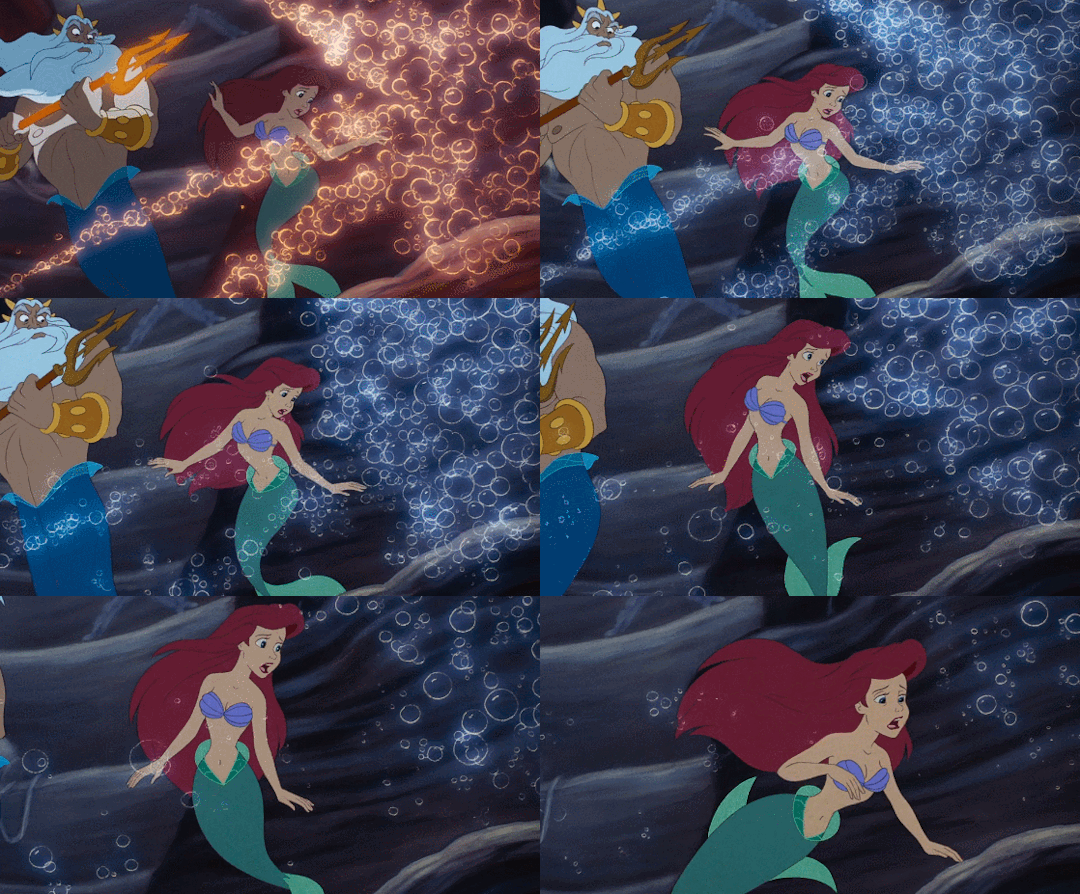
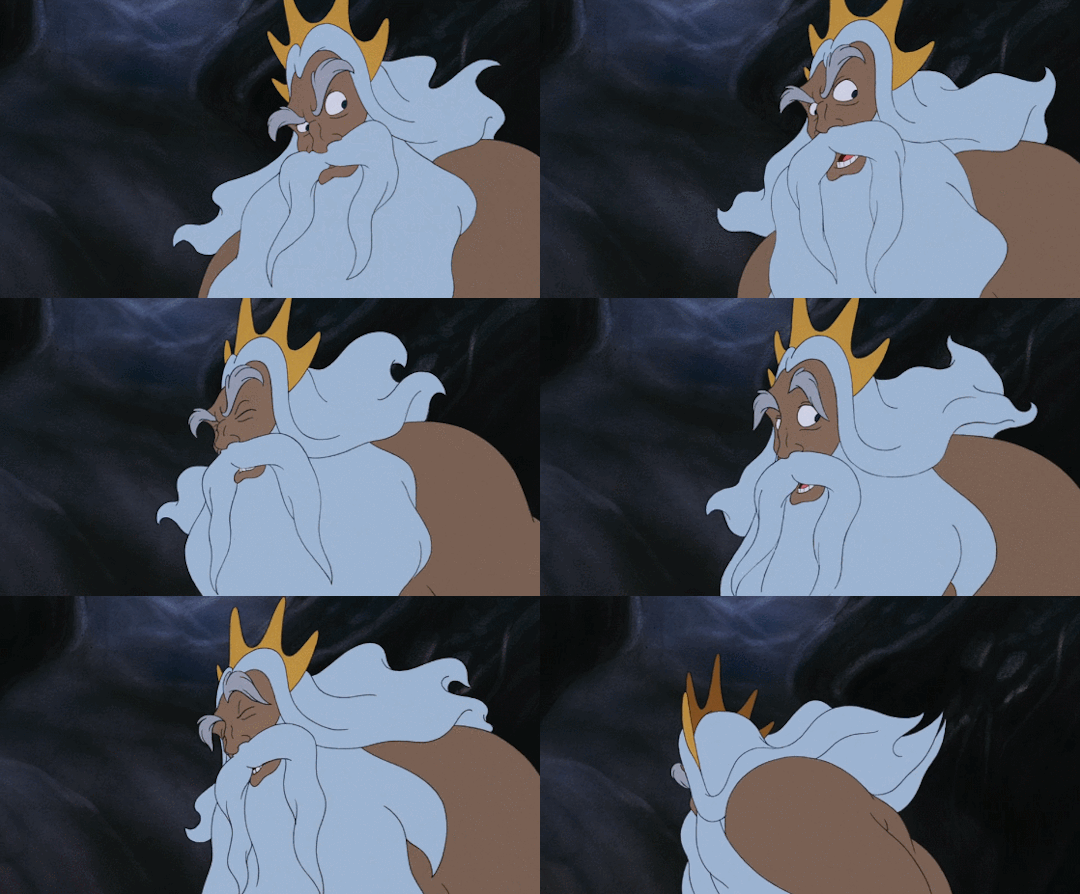
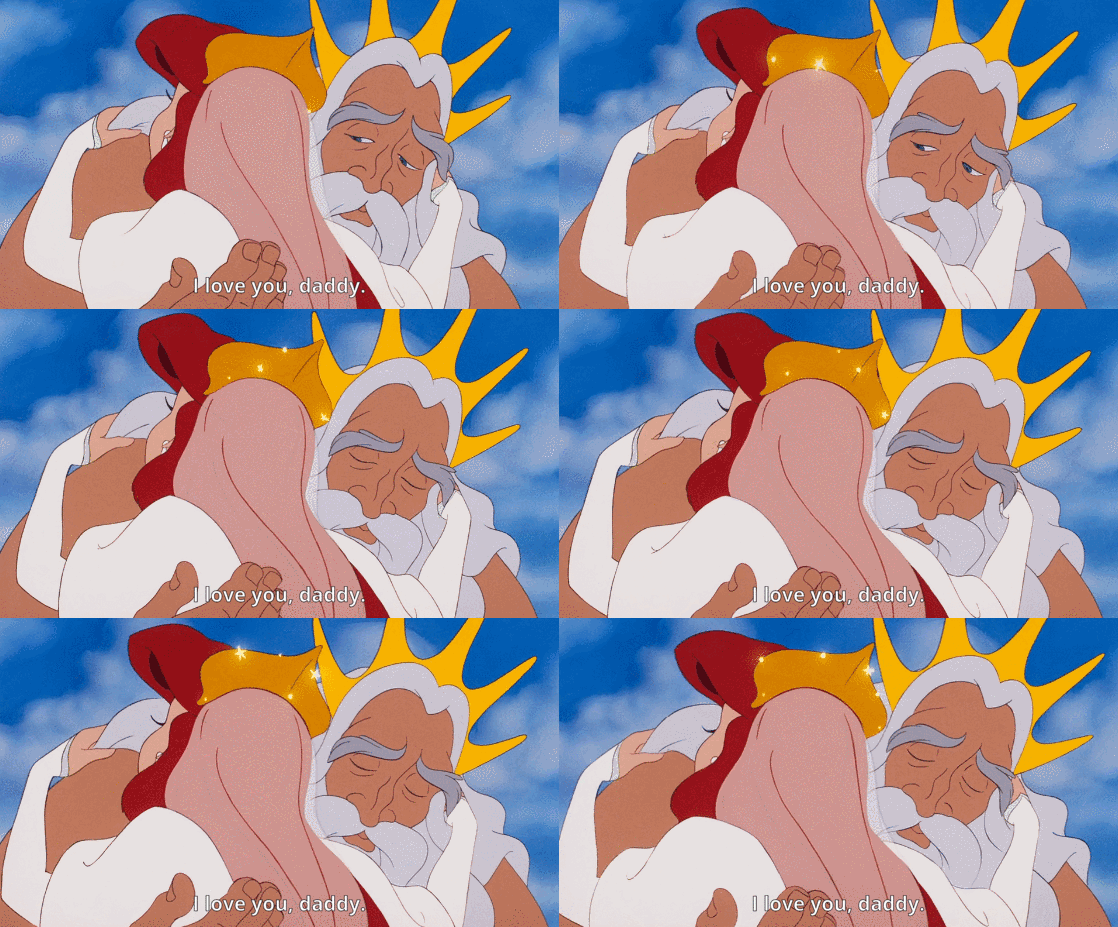
After destroying the grotto, Triton realizes he has done a horrible thing.
Look into his eyes after Ariel falls to weeping:
Look at the regret in his eyes. Look at the remorse. He knows he has gone too far. He never meant to hurt his daughter like this.
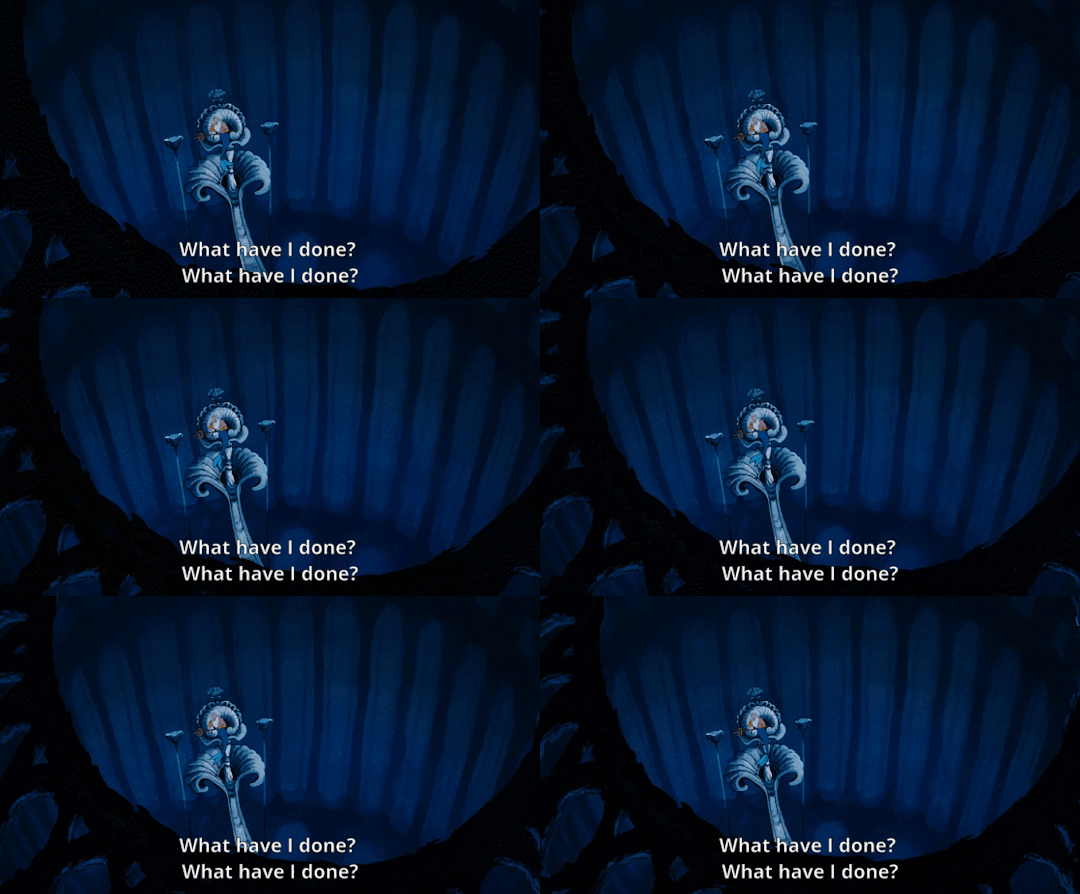
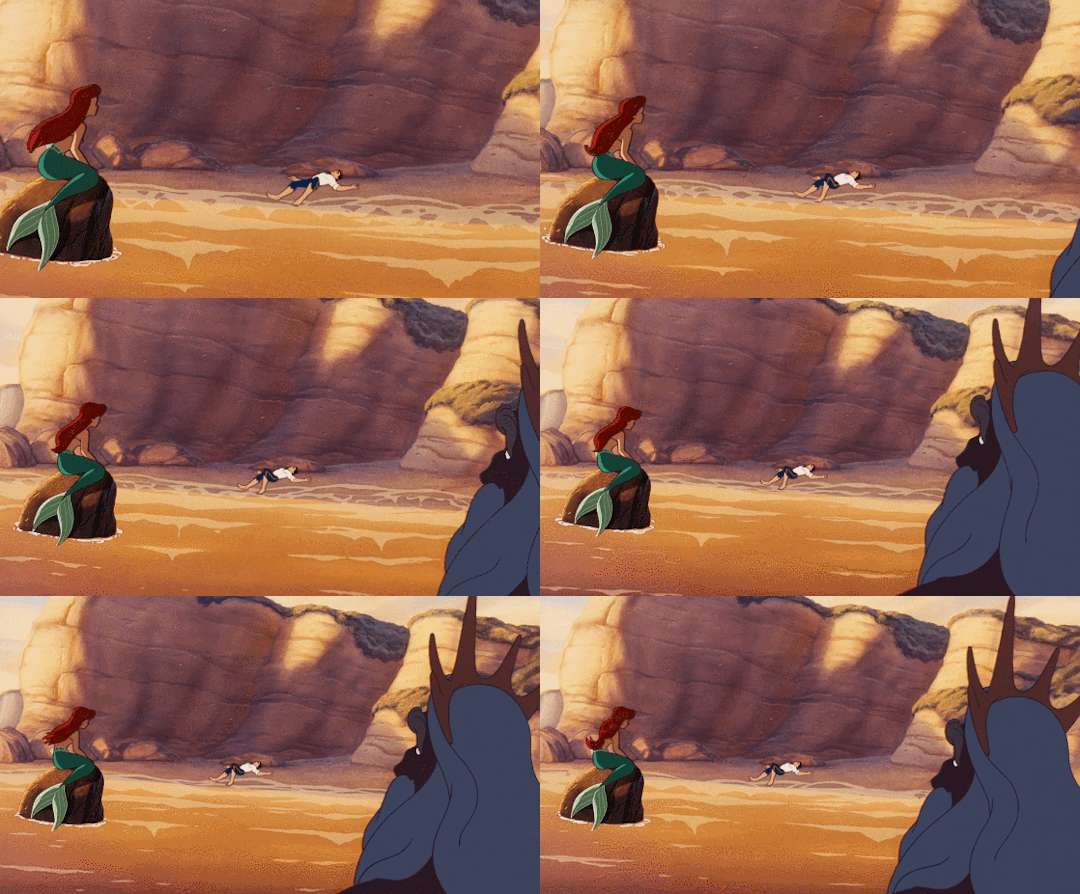
And when Ariel vanishes from Atlantica, Triton takes responsibility for his actions. What does he say when his daughter cannot be found? Does he say, “What folly has my daughter gotten herself into now?”
No. He says:
Simply saying that Ariel ‘gave up [her] voice for a man’ ignores the painful complexity of the situation in which she finds herself. It ignores the depth of her motivation. It ignores Triton’s culpability. It ignores her best character traits and only highlights her flaws (and yes, she has flaws, for she is a multifaceted, well-written character.)
But Ariel’s rejection of prejudice, her ability to see beauty in a group that nearly everyone around her demonizes, her courage and determination and love, are all venerable traits…
…and Ariel’s courage, determination, and love are what inspire Triton to open his heart and change.
Some people say that The Little Mermaid is more Triton’s story than Ariel’s. I disagree and feel that assessment unfairly dismisses Ariel’s emotional journey. Triton has a compelling arc in the film – but that arc is only set in motion because of Ariel’s agency.
He learns from his daughter’s example.
He grows because of her.
Why don’t we talk more about Ariel, the young woman who always challenged her father’s prejudice? Why don’t we talk more about Ariel, who actively spoke out about the flaws she saw in her society? Why don’t we talk more about Ariel, whose actions helped change that society for the better? Why don’t we talk more about Ariel, who formed a bridge between two worlds and enacted positive change?
Why don’t we talk more about that Ariel?
I know Ariel can be impulsive, but she is sixteen years old, and her impulsiveness only makes her character realistic. She makes mistakes but, like her father, she owns up to those mistakes and learns from them:
There are critics of Ariel’s character who want to make the story of The Little Mermaid black and white. Because Triton recognizes Ariel’s impulsiveness, they ignore Triton’s faults and trivialize Ariel.
Yet, the story the film presents is not so black and white. Ariel and Triton are not so one-dimensional.
They both learn from each other and grow together.
This embrace is so meaningful because, by the end of the film, Triton finally shows Ariel the same respect he asks of her and in so doing, he earns her respect.
Ariel, meanwhile, recognizes her own mistakes and gains a new appreciation for her father.
The Little Mermaid is a beautiful film and Ariel is a brave, inspiring, complex heroine.
I also want to point out, Howard Ashman, a gay man who died of AIDS, was a key creator in this film. He also had a key role in creating Beauty and the Beast. The films we worked on were about outcasts.
@the-blue-fairie thank you so much for putting into words what I felt but couldn’t explain! Ariel has always been my fave princess as well, and as I grow older I’ve come to realize more and more how she will never stop being a great representation of me. Exactly because of all what you wrote above. Thank you. I’m a complete emotional mess but happy, too. ♡
(Image description: a white square over a background of flowers white black text that says “witch is a gender neutral identity”. End image description.)
The real reason it’s a fucking travesty Peter Parker is “straight” is that he would have a fucking field day making gay jokes. Imagine Spiderman wit mixed with millennial gay humour. He’d be unstoppable
[Criminal, or Steve. Or someone] give it to me straight. Why is some kid swinging around and beating up people in Queens?
[Peter] Firstofall, nothingI dois straight.
[Villain punches him]
[Peter] this is homophobia.
[Someone. Probably Tony] he said nothing about gay people, though?
[Peter] but he hit me. So again. Homophobia.
[Tony] you could not have picked a worse time to come out of the closet.
[Peter] bold of you to assume I was ever in the closet to begin with. I’ve been giving off Chaotic Twink Energy my whole damn life.
Aunt may: so why can’t you get your driver’s license again??
Peter: I’m???? Gay????
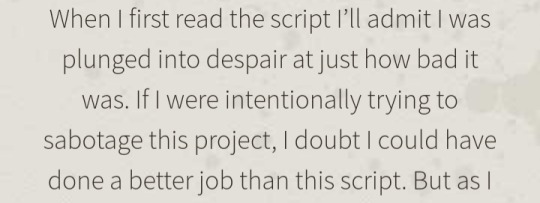
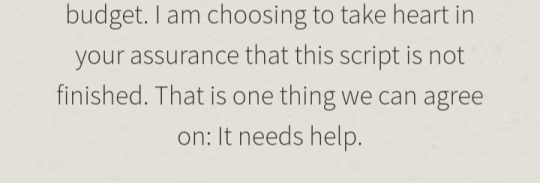
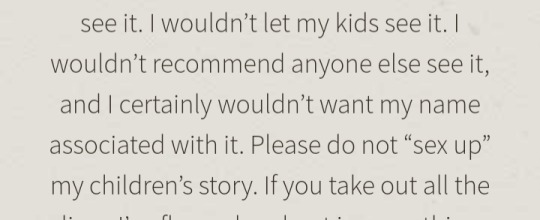
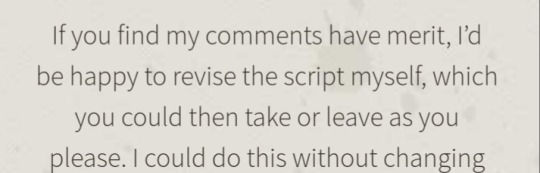
This is why we only allow grown-ups to write movie scripts
What if I told you…this whole post was just friends joking around…and not an actual submission for a Spiderman script…you fucking walnut
You heard the Walnuts, guys. We aren’t allowed to have fun anymore.
you heard the walnuts
guys we aren’t allowed to
have fun anymore
^Haiku^bot^9. I detect haikus with 5-7-5 format. Sometimes I make mistakes.
Help me pay my electicity bills! Being robot is sometimes expensive thing. | PayPal | Patreon






 SlythKris (tumblr backup babey)